
Table of Contents
Introduction
In continuation of my previous post, I’m excited to present an updated blog post with insightful facts and statistics about eczema. As a seeker of knowledge, I’ve gone deeper into this topic to bring you a more enriched perspective.
Understanding Eczema
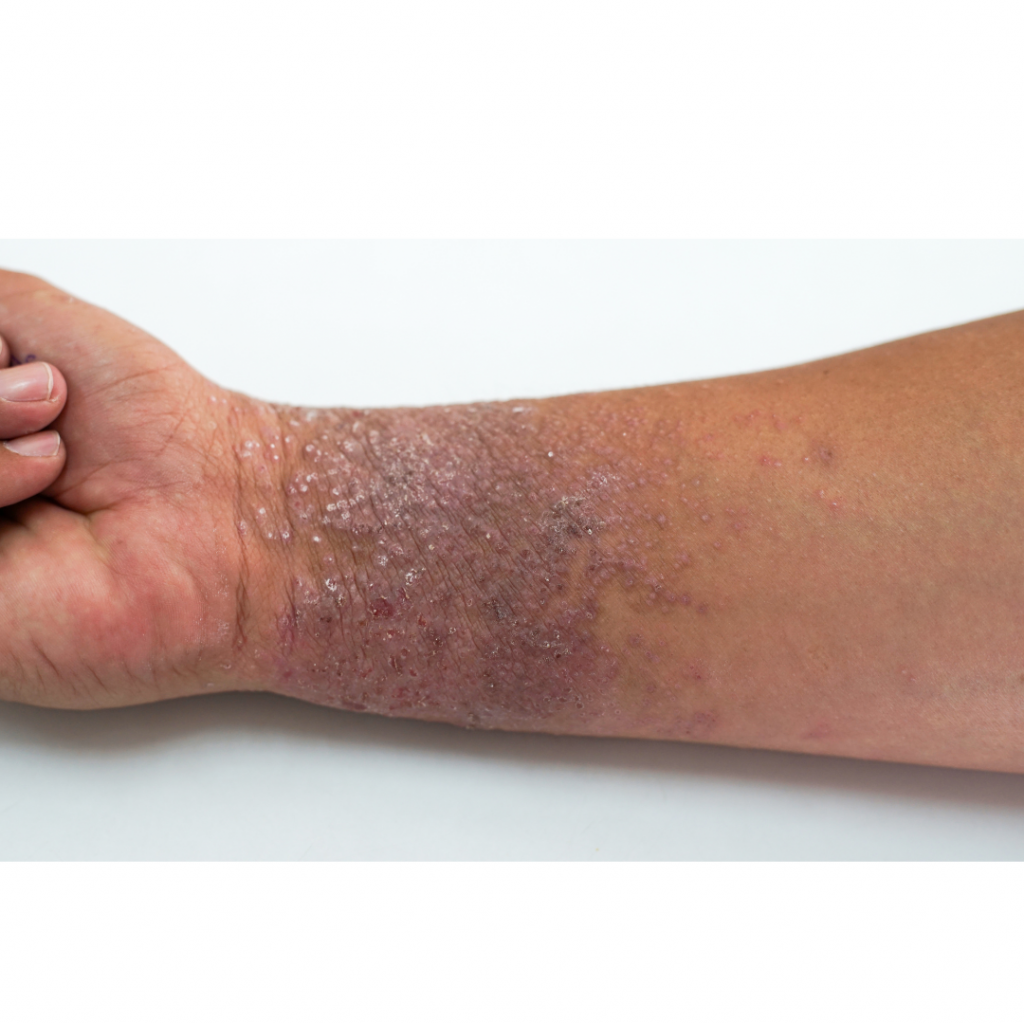
Eczema is a non-contagious skin condition, that manifests as itchy, reddened, dry, and irritated skin. The main symptom is itchiness. This is also referred to as atopic dermatitis, a term used by both individuals and medical professionals.
Mainly emerging in early childhood, it often disappears from individuals’ transition into adolescence and adulthood. However, there are instances where eczema persists into adulthood. It can emerge at any age, caused by various triggers and factors.
Different Varieties
There are several types of eczema: atopic dermatitis, contact dermatitis, dyshidrotic, nummular, seborrheic dermatitis, and stasis dermatitis. Focusing on my personal journey and expertise, my blogs will predominantly centre on atopic eczema, the type I’ve been diagnosed with.
Atopic Eczema
This can be seen as hereditary, often combined with conditions like asthma, hay fever, and allergies. If a parent has any of these conditions, there’s a possibility that their children might, too.
Perceiving the tangible manifestations of eczema is paramount for understanding its impact. I’ve incorporated a visual depiction of how it can present itself, including a snapshot of my personal experience, which might provide valuable insight to readers.
Embarking on Statistics

The National Eczema Society reveals that 1 in 5 children and 1 in 10 adults in the UK have eczema. Further research conducted by the National Library of Medicine concludes that it peaks in male children at age 2 and males over 70, with a dip among adults aged 30-39. Notably, eczema is more popular in ethnic minority groups, particularly individuals of black and Asian descent.
In the US, 31 million individuals have eczema, accounting for about 10% of the population as of 2021. The global landscape is equally affected, as evidenced by the Global Report on Atopic Dermatitis, which estimates a worldwide eczema population of 223 million in 2022. As of 2021, the population worldwide was 7.8 billion.
Pause for Reflection

Pause for a moment and reflect on the amount of lives affected every day. In the UK, this is 10% of adults and 20% of children; in the US, it’s 10% across all age groups; globally, it’s 4-5%. Considering these numbers, it’s highly likely that someone within your circle – a family member, a friend, or a colleague – is living with this condition. Even if you haven’t personally experienced eczema, being aware of it for the well-being of others is essential.
What are the causes?
Analysing the causes is complex, and is influenced by many individual factors. Internal dynamics like genetics, stress, immune responses, hormonal imbalances, allergies, and diet play pivotal roles. External elements such as weather, soaps, pets, humidity, cleaning products, and clothing can exacerbate the condition.
Hope Despite Uncertainty
While researchers affirm that eczema remains incurable, it’s far from unconquerable. Individuals can tailor their approaches to suit their unique needs, focusing on moisturising, appropriate clothing, trigger identification, and allergy testing. Many have healed themselves using diverse strategies like optimizing gut health, adopting dietary changes, seeking guidance from eczema coaches, and even embracing holistic paths such as addressing past traumas and exploring the subconscious.
A Journey of Discovery
As I journey through my own experiences, I’m still exploring what may provide relief for myself. Each individual’s journey is unique, and what works for one might not work for another. Eczema addresses the individuality of our experiences, reminding us that no two paths are identical.
Conclusion
In conclusion, eczema continues through factors – genetic, environmental, and individual. By understanding these facts and statistics, we gain a deeper appreciation for the challenges and triumphs of those living with eczema. As we move forward, let’s nurture empathy and understanding fostering an environment where individuals can find the support and validation they deserve.
I also have a YouTube video talking about this topic. Please check out the link below to watch my video: